Clinical intelligence
Go beyond the note.
 MyMedicalScribe
More than an ambient scribe. Prepare from the chart, capture the encounter, generate documentation and codes, and return completed work to the EHR.
In the field today
This is what's happening in clinics today.
Built to work across specialties. From primary care and cardiology to pediatrics and behavioral health, MyMedicalScribe adapts to how each specialty documents.
- Primary care
- Orthopedics
- Cardiology
- Oncology
- Pediatrics
- Behavioral health
- Neurology
- General surgery
- OB/GYN
- Gastroenterology
- Dermatology
- ENT
- +40 more
- 90%
- of MyMedicalScribe physicians are capturing, coding, and closing the chart the same day
- 74%
- Reduction in documentation costs
See it in action
See the entire encounter workflow.
Start with an appointment. End with the documentation, suggested codes, and completed work back in the EHR.
Six steps, one encounter
Note Codes EHR updated
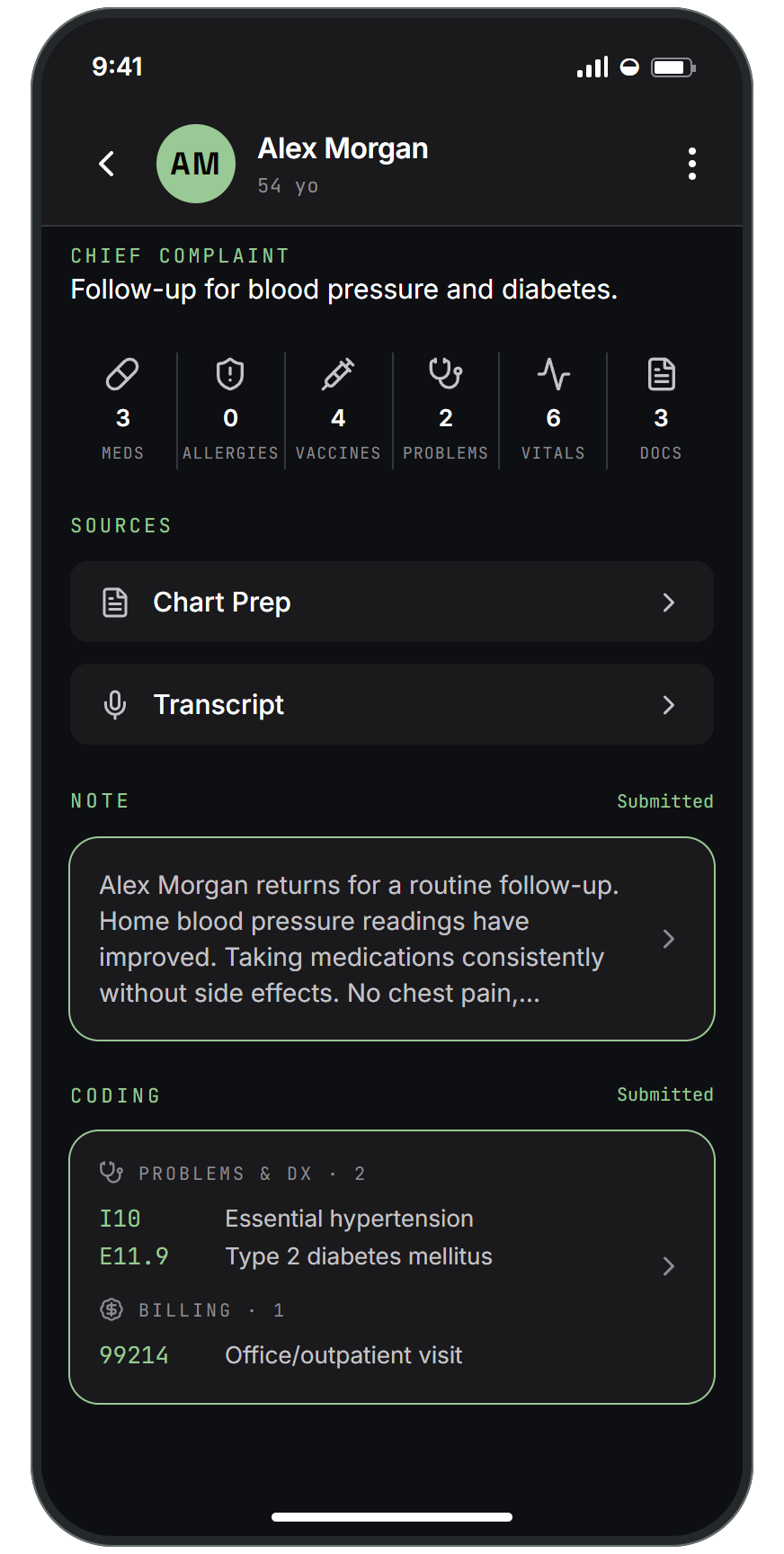
MyMedicalScribe app walkthrough. Fictional patient, with time condensed for the demo.
Open Alex Morgan’s follow-up from the provider schedule, with the patient’s chart already connected.
Press Play or choose a step to explore.
Before the conversation
Walk in knowing the story.
Providers shouldn't have to reconstruct a patient's history in the moments before they enter the room. Chart Prep prepares an AI-generated clinical view directly from the patient's chart, organized around templates your practice defines.
What Chart Prep surfaces
- Relevant history for the visit
- Abnormal findings and recent results
- Overdue items and care gaps
- Practice-defined sections you control
Less chart digging. More context before the visit.

Practice-defined structure; findings surfaced in context; drill-down to source information.

During the conversation
The best documentation workflow is the one that disappears.
MyMedicalScribe listens naturally during the encounter so providers focus on the patient rather than building the note while the visit happens. No reconstructing the encounter later. Just the conversation becoming the clinical record. Providers who would rather dictate can still do that.
Designed for the room
- One tap to start; stay with the patient
- Speaker differentiation during the conversation
- Pause and resume controls
- Works when connectivity is unreliable, then syncs
Offline mode
No connection? Keep going.
Capture continues on-device and syncs when connectivity returns.
After the encounter
The generated note is no longer the differentiator.
Many ambient AI tools can create documentation. MyMedicalScribe goes further, suggesting diagnosis and billing codes as part of the same encounter workflow, for the clinician to review and confirm. The goal isn't a finished note. It's a finished encounter.

Coding intelligence that goes beyond a generic suggestion
Specialty-aware and payer-aware coding intelligence helps surface appropriate diagnoses, E/M codes, modifiers, and other coding considerations, with traceability back to the documentation.
The clinician stays in control
Every suggestion shows its reasoning in plain language. The clinician can accept, modify, or reject, and nothing posts to the record without a deliberate sign-off. AI that supports the clinical decision instead of replacing it.
From generated to done
AI shouldn't create another copy-and-paste workflow.
A note sitting inside an AI application is still unfinished work. MyMedicalScribe uses the JardogsHealth interoperability foundation to return notes, confirmed codes, and structured output into the systems your organization already uses.
- MyMedicalScribeDocumentation + confirmed codes
 The ClinicalConnectorMaps + validates + writes back
- EHREncounter completed
Generate it. Review it. Send it back.
Built for clinical reality
Because care doesn't happen under perfect conditions.
Offline mode
Keep documenting without connectivity.
99+ languages
Capture the conversation in the patient's language.
Specialty-aware
Templates and workflows built for different specialties and encounter types.
Provider customization
Documentation adapts to how clinicians actually work.
Appointment-type templates
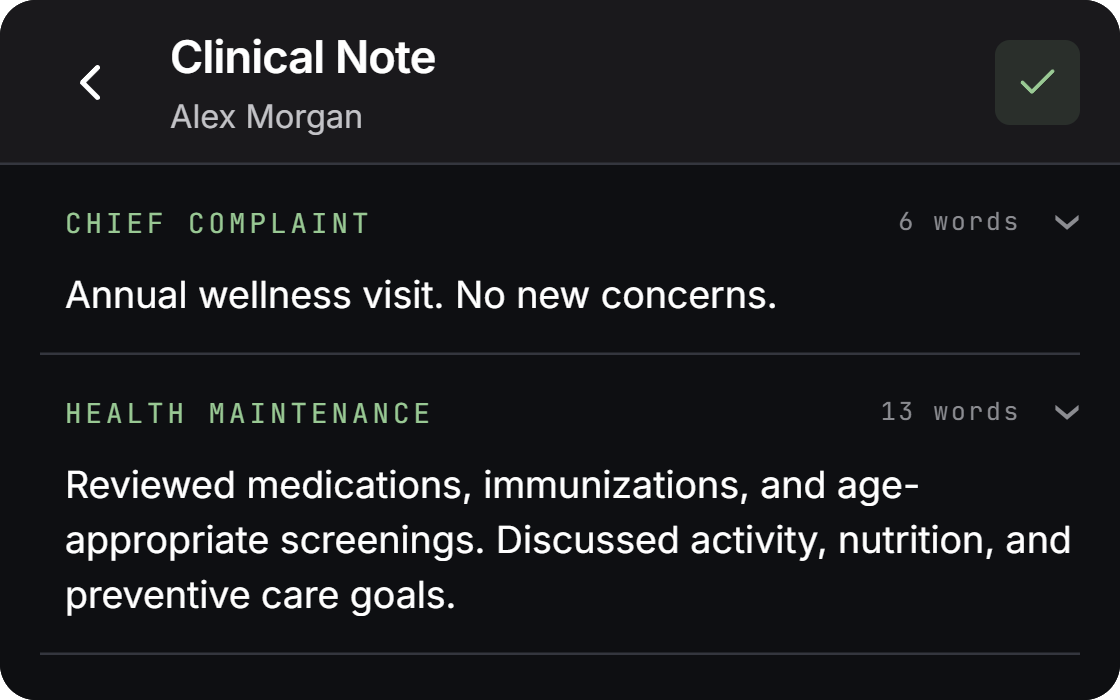
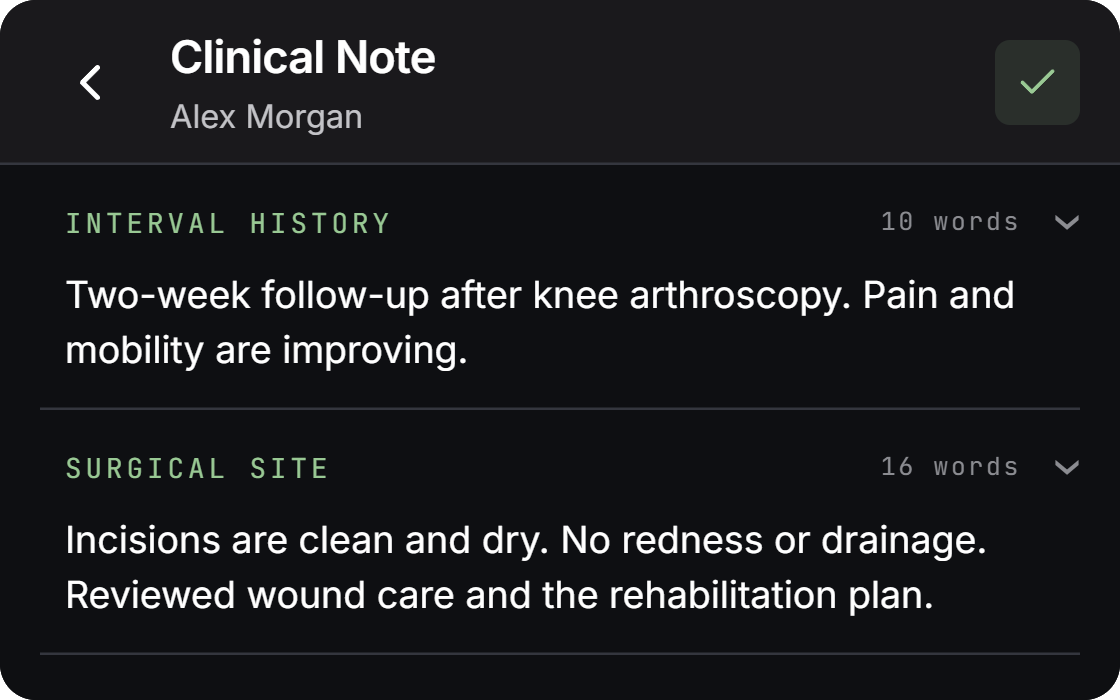
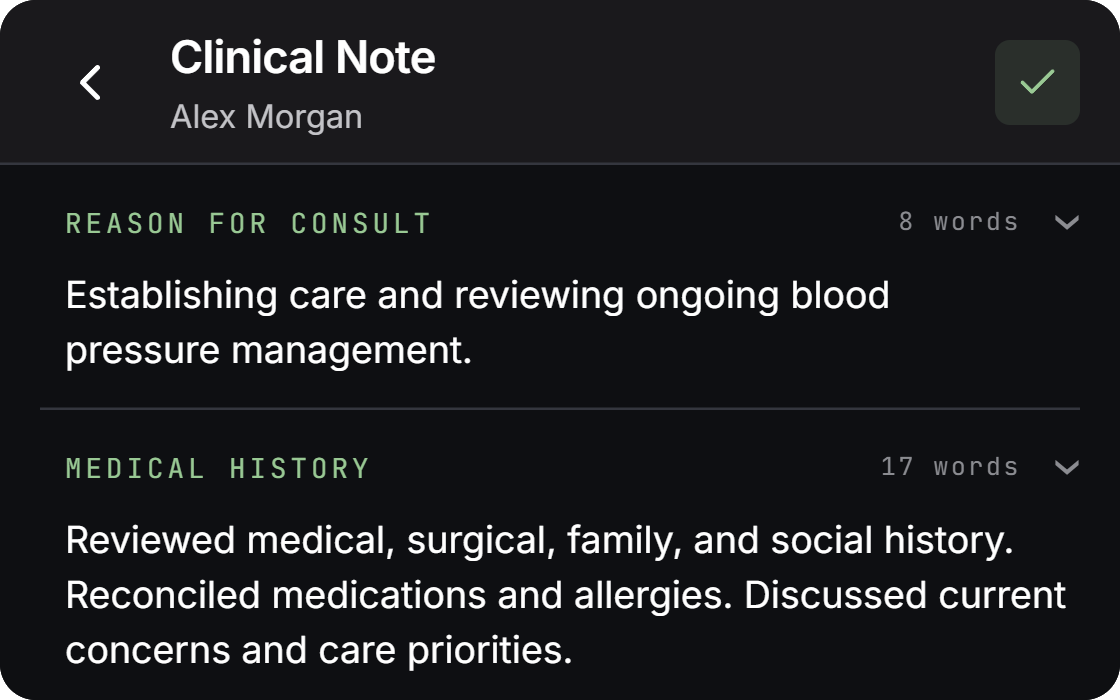
A follow-up shouldn't document like a wellness visit. Documentation follows the encounter type, the specialty, and the provider's own preferences.
Annual physical
Structured for a wellness visit.
Post-op follow-up
Different structure for a different encounter.
New patient consult
Comprehensive intake documentation.
Powered by The ClinicalConnector
Built to work where the record already lives.
EHR agnostic by design. MyMedicalScribe uses The ClinicalConnector to bring relevant information into the workflow and return completed work to connected systems.
- Epic
- Oracle Health
- Altera TouchWorks™
- athenahealth
- eClinicalWorks
- Veradigm
- and more
From the people using it
What clinicians say.
“We went from some abysmally low number to the mid-90s of providers whose notes are done when they walk out the door. Not just written down, done, dictated, integrated in the chart, and billed for.”
MyMedicalScribe
Finish more than the note.
From Chart Prep to documentation, coding, and EHR writeback, complete more of the encounter in one workflow.